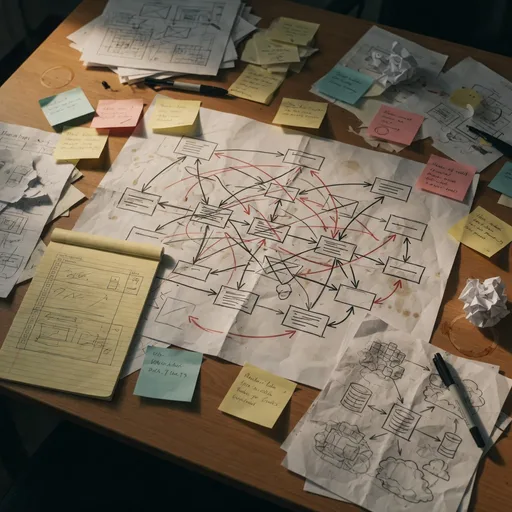

Most teams that say they want CI/CD really just want the deploy button to hurt less, so they reach for CD first. That is the wrong order. The first problem is CI: trunk-based development and meaningful automation. Get those right and CD becomes a controlled move of a known-good main branch instead of a faster way to ship uncertainty.
Process5 articles
Arguments about monorepos usually start with tooling, but the real issue is coordination. A repository structure is a delivery model: it encodes ownership, dependencies, release flow, and how much coordination people need before they can safely ship. Size repositories around deployables and publishables so the repo boundary tells the truth about how the software actually ships.
Once a defect is in production, the customer should not become part of your debugging environment. Triage that feels like progress, more logs, another build, "we think we're close," often just means the customer keeps absorbing the failure while engineering looks for certainty. The mature move is to stop the bleeding first, then diagnose.
Boring software is not dull to build, it is uneventful to operate. The thing you ship can be clever and satisfying, but running it in production should be routine: practiced rollbacks, clear ownership, and no reliance on heroics. That kind of boring is engineered, not accidental.
Long-running branches feel productive for the developer who opens them, but the cost lands on everyone else through delayed integration, hidden assumptions, and uncertainty that surfaces right before a release. Trunk-based development is less a trend than the natural consequence of taking CI/CD seriously.